

Running a successful dental practice requires more than delivering excellent patient care. As a practice grows, owners often face challenges related to leadership, financial management, operations, and team development.
Dental coaching for business helps practice owners strengthen these areas by providing strategies that support sustainable growth, improved efficiency, and long-term success. Tower Leadership works with high-performing dental entrepreneurs to develop leadership systems, organizational structure, and financial discipline that support scalable practices.
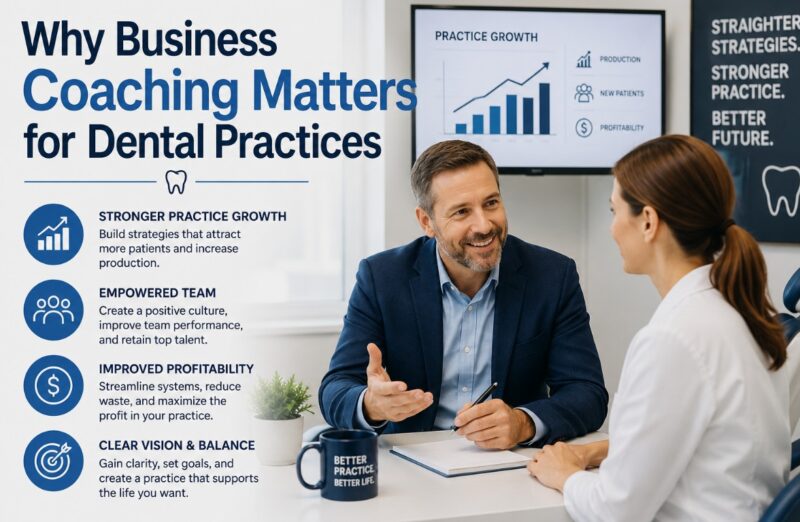
Why Business Coaching Matters for Dental Practices
Many dentists are highly skilled clinicians but receive little formal training in business management. As responsibilities increase, it becomes important to develop systems that support growth without relying on the owner to manage every decision.
Dental coaching for business can help practices improve:
- Leadership development
- Financial planning
- Team accountability
- Operational efficiency
- Strategic decision-making
- Long-term business planning
By strengthening these areas, practice owners can build organizations that are better prepared for continued growth.
Strengthening Leadership
Leadership has a direct impact on every aspect of a dental practice, from employee engagement to patient experience. Coaching programs often help owners transition from managing daily operations to leading an organization with clear goals and effective systems. Tower Leadership emphasizes leadership development as a key driver of practice growth and long-term stability.
Areas of focus may include:
- Communication skills
- Decision-making
- Delegation
- Accountability
- Strategic planning
Developing these skills can help leaders spend more time focusing on growth rather than daily operational issues.
Developing Leadership Beyond the Practice Owner

A practice becomes easier to scale when leadership does not stop with the owner. Office managers, clinical leads, and experienced team members may need the authority and preparation to manage specific areas of the business. This does not mean giving up oversight. It means defining which decisions can be handled by each role, what results are expected, and when the owner should become involved.
Coaching can help identify potential leaders and create a more dependable management structure. When capable team members can address scheduling concerns, workflow problems, routine staff questions, and performance follow-up, the dentist gains more time for strategic planning. A second layer of leadership can also create clearer career paths for employees. That may improve engagement and reduce the risk that the practice becomes dependent on one person for every operational answer.
Improving Financial Performance
Understanding financial performance is essential for making informed business decisions. Coaching often helps practice owners evaluate key financial metrics, identify opportunities for improvement, and build strategies that support profitability and long-term value. Tower Leadership’s coaching approach places significant emphasis on financial clarity and disciplined business growth.
Topics commonly addressed include:
- Cash flow management
- Profitability
- Practice valuation
- Growth planning
- Capital allocation
Better financial insight allows owners to make decisions that support both current operations and future expansion.
Turning Practice Data Into Practical Decisions
A growing dental practice usually collects plenty of information, but having numbers is not the same as using them effectively. Coaching can help owners decide which metrics deserve regular attention and how those metrics should influence business decisions. Production, collections, overhead, case acceptance, new-patient flow, scheduling efficiency, and staffing costs can each reveal a different part of practice performance.
The purpose is not to create more reports for the team to review. It is to build a manageable scorecard that identifies changes early. A decline in case acceptance may point to communication problems, while a consistently full schedule may indicate a capacity issue rather than a need for additional marketing. Data becomes useful when it leads to a specific action, a responsible person, and a follow-up date. This approach replaces assumptions with clearer evidence and supports more disciplined growth.
Creating High-Performing Teams

Strong teams are built through clear communication, defined expectations, and consistent leadership. Dental coaching for business often includes strategies that improve collaboration while developing future leaders within the practice.
Areas that may be addressed include:
- Team communication
- Leadership development
- Employee accountability
- Organizational structure
- Performance management
When team members understand their responsibilities and share common goals, practices often operate more efficiently.
Building Systems That Support Growth
As practices expand, informal processes may no longer be sufficient. Coaching frequently focuses on creating systems that improve consistency while reducing dependence on the owner for every operational decision.
Examples include:
- Standardized workflows
- Leadership structures
- Operational procedures
- Performance tracking
- Strategic planning systems
Well-defined systems can improve efficiency and make future growth easier to manage.
Protecting the Patient Experience as the Practice Expands
Growth should not make the practice feel less personal or less organized to patients. Expansion can create longer wait times, inconsistent communication, scheduling confusion, and differences in how team members explain treatment or financial policies. Coaching can help leaders review these risks before they become part of the normal patient experience.
A useful approach is to examine the full patient journey, from the first phone call and appointment confirmation to check-in, treatment presentation, payment, and follow-up. The ADA notes that every communication helps shape a patient’s opinion of the dentist and the care provided by the team. Patient experience should therefore be treated as an operational system, not simply as a matter of friendliness. Clear standards, staff training, and regular feedback can help a larger organization remain consistent while keeping interactions personal and professional.
A Structured Coaching Process
Business coaching is typically most effective when it follows a structured framework rather than offering one-time advice. Tower Leadership provides coaching programs, workshops, and advisory services designed to help dental entrepreneurs develop practical strategies they can implement within their practices.
A coaching process may include:
- Assessing the current state of the practice
- Identifying opportunities for improvement
- Developing a customized action plan
- Implementing operational and leadership strategies
- Measuring progress and refining the approach
This structured process helps practices build lasting improvements rather than temporary solutions.
Preparing for Long-Term Success
As practices grow, leaders often need to think beyond day-to-day management and focus on creating organizations that can thrive over the long term. Dental coaching for business encourages owners to build leadership capacity, strengthen financial performance, and establish systems that support sustainable growth.
Potential long-term benefits include:
- Improved organizational structure
- Stronger leadership teams
- Greater operational consistency
- Better financial performance
- Increased scalability
These improvements can help practices navigate growth with greater confidence and stability.
Investing in Business Growth

Growing a dental practice involves more than increasing production or adding new patients. It requires thoughtful leadership, disciplined financial management, and systems that allow the organization to grow efficiently.
Through dental coaching for business, practice owners can strengthen the foundation of their practice while preparing for future opportunities.
By developing stronger leaders, more effective teams, and scalable business systems, practices can position themselves for lasting success.
Frequently Asked Questions
1. What is the difference between a dental coach and a consultant?
A dental coach primarily develops leadership, decision-making, and long-term business direction. A consultant usually focuses more directly on improving specific systems, processes, and operational problems.
2. When should a dentist consider business coaching?
Coaching may be helpful when the owner struggles to delegate, manage a growing team, understand financial performance, or plan expansion. It can also support established practices that want stronger systems before adding providers or locations.
3. What should a dentist look for in a business coach?
Look for relevant dental industry experience, a clear coaching process, practical performance measurements, and an understanding of leadership, finances, and business structure. The coach should provide actionable guidance rather than general motivation.
4. How is coaching progress measured?
Progress may be evaluated through selected practice KPIs, such as production, collections, overhead, new-patient numbers, accounts receivable, or provider performance. The ADA recommends beginning with a manageable set of indicators and reviewing them regularly.
5. Can coaching help with opening another location?
Yes. Coaching can help owners assess whether the current practice has the profitability, leadership capacity, systems, and operational stability needed to support expansion. Existing performance should be evaluated before committing to a second location.